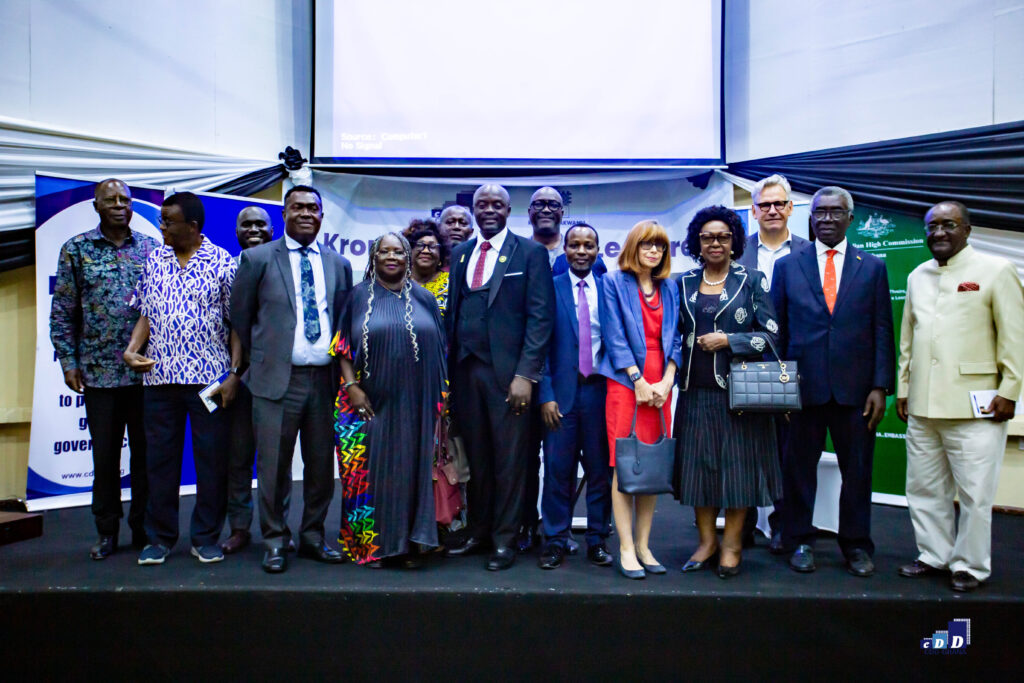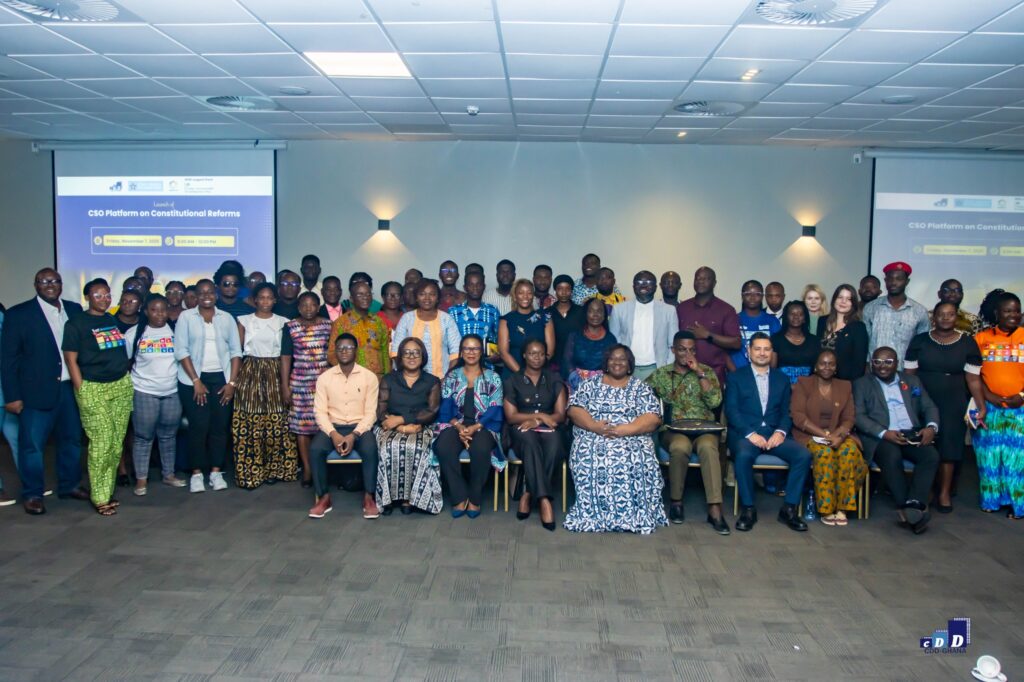
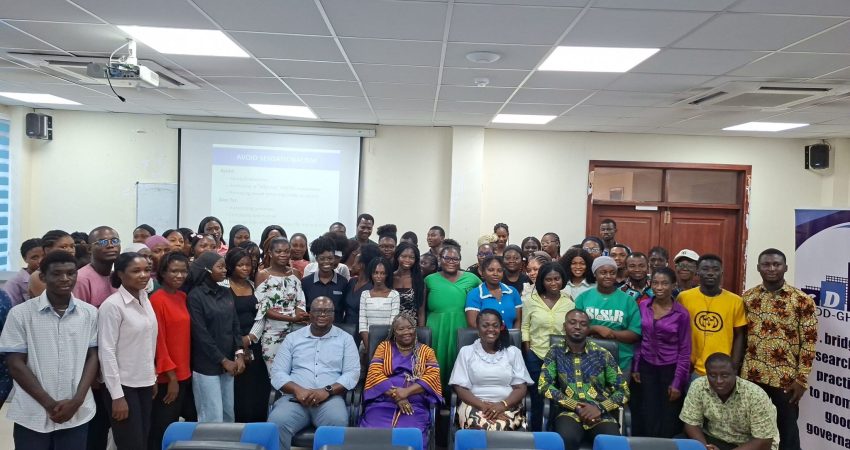
The Ghana Center for Democratic Development (CDD-Ghana) engaged over 70 journalism students of the University of Media, Arts and Communication (UniMAC) in a social dialogue on human rights and a rights-based approach to journalism and reporting, on Thursday, December 11, 2025.
The engagement, led by CDD-Ghana’s Human Rights and Social Inclusion Team, aimed to equip students with practical knowledge and skills to apply human rights principles as they prepare to enter the media profession.
The sessions covered key areas central to journalism practice, including professional and ethical journalism, human rights in Ghana, constitutional protections for all persons, Ghana’s secular democratic state, and effective human rights reporting.
Professor Audrey Gadzekpo, Professor of Communication and Board Chair of CDD-Ghana, led the opening session on professional and ethical journalism, emphasizing that ethics are not shaped by personal feelings, religious beliefs, or social acceptance, but by established principles that guide responsible professional practice.
She also addressed the growing tendency for journalists to prioritize speed over accuracy in the digital media environment, stressing that verification remains critical, particularly in the reporting of human issues.
“Because of social media and the fact that journalists get news from all kinds of sources, the verification becomes very important and when it comes to human rights, it’s even more important because false information could lead to somebody being attacked and compromising human rights,” Prof. Gadzekpo stated.
The second session, led by Dr. Michael Akagbor, Programs Manager at CDD-Ghana, focused on deepening participants’ understanding of civil, political, and citizenship rights, and what these rights mean for journalists as voices of the people.
Dr. Akagbor explained that, “The engagement was to see how they can adopt a human rights approach to journalism and reporting, considering that they are going to be in the market soon. The expectation is that they will become very conscious of the human rights approach to journalism. That it doesn’t just become work that is only looking to sensationalise and run with news, but to be more critical of news and reporting. So the whole idea is just that we have shared skillset with them, we have shared knowledge with them that can be able to help them understand what human rights are and the importance of human rights to journalism, and understand why a rights-based approach is important for the progress of our democratic enterprise”.
Professor Takyiwaa Manuh, Senior Fellow at CDD-Ghana, concluded the first part of the day with a session on human rights protections enshrined in Ghana’s Constitution. She emphasized that human rights are inalienable, indivisible, and interrelated, and underscored the responsibility of journalists to be grounded in these principles.
She also described the seminar as timely, noting, “I think the organisation of this seminar is very timely. The media is the fourth estate; they have the duty to inform, educate, entertain etc but they must do it based on knowledge. They must also be doing it, fully cognisant of our human rights commitments and obligations”.
Mr. William Nyarko, Executive Director, Africa Centre for International Law and Accountability (ACILA), led a session on the role of the media in promoting the rights of all persons and ensuring effective human rights reporting. The session included practical writing exercises that examined previous media reports, allowing students to assess framing, language, and ethical considerations.
Professor James Dzisah, Dean of the School of Education and Leadership at the University of Ghana, who delivered a session on the Ghana’s secular democratic state added that, “Engagements like this allow us to situate issues about human rights within the context of citizenship and democratic governance that allow us to see how we can have the separation between church, state and traditional authorities, political authorities having different roles to play”.
Speaking on the relevance of the workshop, Perpetua Opoku-Agyemang of the Faculty of Journalism, UniMAC, said, “This workshop is so good for the students. It’s a practical workshop – what they’ve learnt in class, and putting it into practice at this workshop. The questions and exercises that were given to them gave them a lot of understanding, and they appreciated it”.
Students who participated in the engagement also shared their reflections. Kalinda Sosu, a UniMAC student, said, “This was an insightful experience, it was very educational and I think it’s important that student journalists and the youth in general should know about their rights so they know when it’s being violated”.
Prince Ahenkorah, another student participant, noted, “I’ve learnt and discovered a lot. I didn’t even know that as journalists, we’re not supposed to discriminate. Whatever we report on should be balanced. We should take from all angles, irrespective of how we see people in the minority, we should also take their views”.
The engagement was organized in partnership with Equity Net Ghana, a non-profit organization committed to promoting human rights in Ghana.