

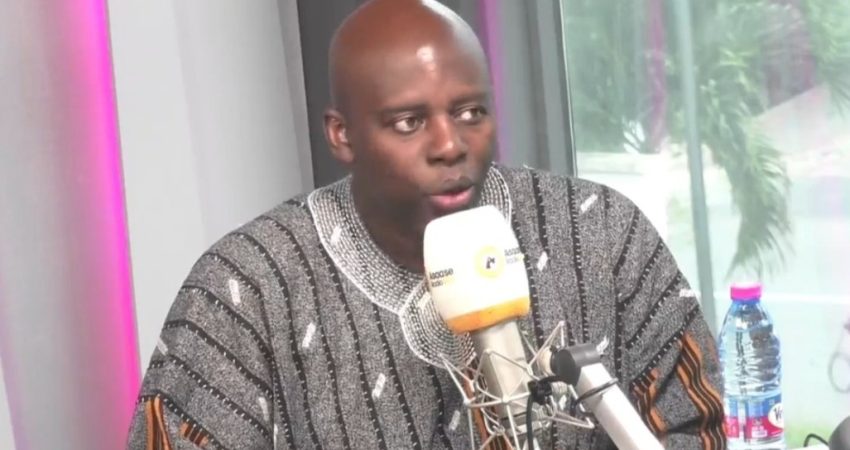
Democracy and Development Fellow at the Ghana Center for Democratic Development (CDD-Ghana), Professor John Osae-Kwapong has urged Ghanaians to exercise restraint in their criticism of the judiciary following the Court of Appeal’s decision to acquit former Microfinance and Small Loans Center (MASLOC) chief executive Sedina Tamakloe-Attionu, warning that inflammatory rhetoric could further erode public confidence in the courts.
Speaking on The Forum, a political and current affairs program on Asaase Radio on Saturday (1 August), Osae-Kwapong told host Wilberforce Asare that the case highlighted the delicate balance between safeguarding due process, ensuring accountability and maintaining public trust in state institutions.
“There is also the issue of due process,” Osae-Kwapong said, arguing that regardless of the circumstances surrounding a case, every accused person must be guaranteed constitutional rights, including the right to appeal.
The Court of Appeal on Thursday (30 July), acquitted and discharged Tamakloe-Attionu, overturning her conviction and 10-year prison sentence imposed by the High Court in a case linked to the alleged misappropriation of public funds.
Osae-Kwapong says he could understand how both courts had reached different conclusions after reviewing their judgments.
“If you look at the High Court judgment, I can see why the High Court will arrive at a place to say you are guilty of these charges,” he said. “But if you also read the 94-page ruling by the appeals court and the steps they go through to arrive at a different conclusion, you can also understand how they would arrive at that conclusion.”
He said one of the central legal issues was whether prosecutors had adequately set out the particulars of the alleged offences, as required by Ghana’s Constitution, to enable the accused to mount a proper defence.
He also pointed to the fundamental principle that the burden rests on the prosecution to prove guilt rather than on the accused to establish innocence.
Public Sceptism
Beyond the legal arguments, Osae-Kwapong said the ruling had fuelled public scepticism because it came against a backdrop of declining trust in public institutions and a widespread perception that influential individuals often escape accountability.
He noted that Afrobarometer surveys have consistently found that many Ghanaians believe powerful people are treated differently under the law.
The circumstances surrounding Tamakloe-Attionu’s departure from Ghana and her subsequent extradition had further intensified public speculation, he added.
“So, you can see why public sentiment would start wondering how a court would arrive at this decision,” he said.
Despite acknowledging the public’s concerns, Osae-Kwapong cautioned political actors and commentators against using language that could undermine confidence in the judiciary.
“The test of how much we believe in our institutions is not when they do what we agree with,” he said. “It is when we deeply disagree with them, and how we express that disagreement becomes key.”
Caution
He warned that excessive political rhetoric risked reinforcing public mistrust of the courts, potentially weakening an institution that citizens may one day rely on to resolve their own disputes.
Osae-Kwapong said Ghana must continue to grapple with the challenge of balancing accountability with respect for constitutional safeguards and judicial independence.
“There are no easy answers,” he said, “but there are important issues that we would continue to wrestle with… to ensure there is always accountability, respect and protection of a person’s due process rights, while also respecting the decisions of institutions even when we deeply disagree with them.”
Source: Asaase Radio