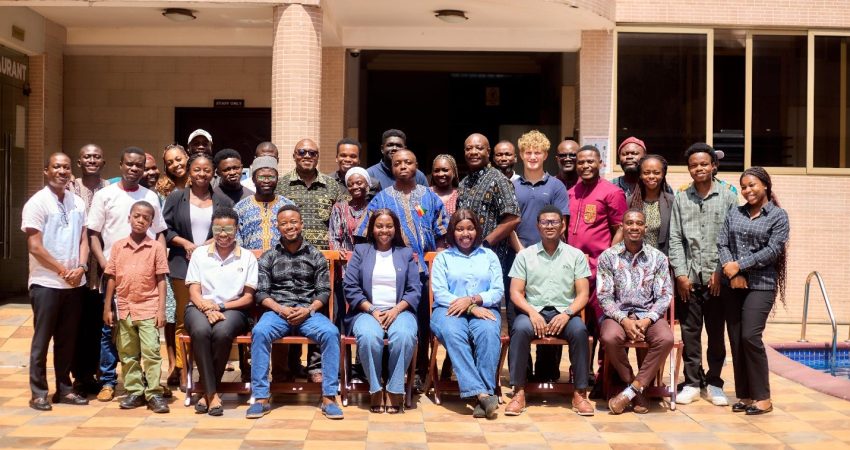
The Ghana Center for Democratic Development (CDD-Ghana) has concluded a series of Training of Trainers (ToT) workshops to empower civil society organizations (CSOs) and youth leaders across the country to champion constitutional reform advocacy.
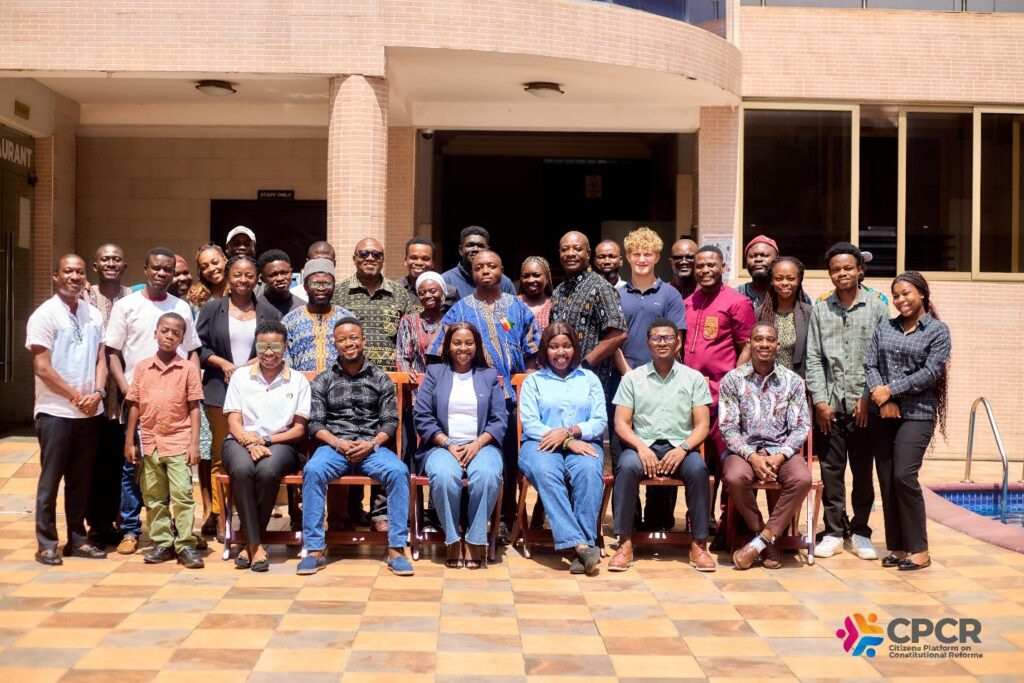
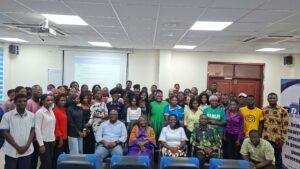
Held in Accra between August 30 to September 5, 2026, the workshops brought together leaders of civil society groups such as A Rocha Ghana, NETRIGHT Ghana, NORSAAC, youth representatives from the Ghana Youth Manifesto Coalition, the National Union of Ghana Students (NUGS), Activista Ghana, and regional youth networks from the Northern, Eastern, Volta, and Ashanti regions, among others.
The workshop, organized in partnership with STAR-Ghana Foundation and Democracy Hub, and supported by the British High Commission (BHC), was designed to build participants’ capacity by equipping them with practical skills in facilitation, public speaking, advocacy, and civic education. The participants also gained a deeper understanding of the Constitutional Review Committee’s recommendations and the Government’s position paper, enabling them to lead informed dialogues within their communities and cascade this knowledge to citizens at the grassrootslevel .
Addressing the trainers, Dr. Kojo Asante, Director of Policy Engagement and Partnerships at CDD-Ghana, underscored the importance of the reform process, reminding participants that constitutional reviews are rare in Ghana’s history and may not happen again for decades. “What we are doing is for our own lives. We probably won’t get another constitutional review for the next 30 years, or it may never come again, as history has shown. So we have to make this one count,” he stated.
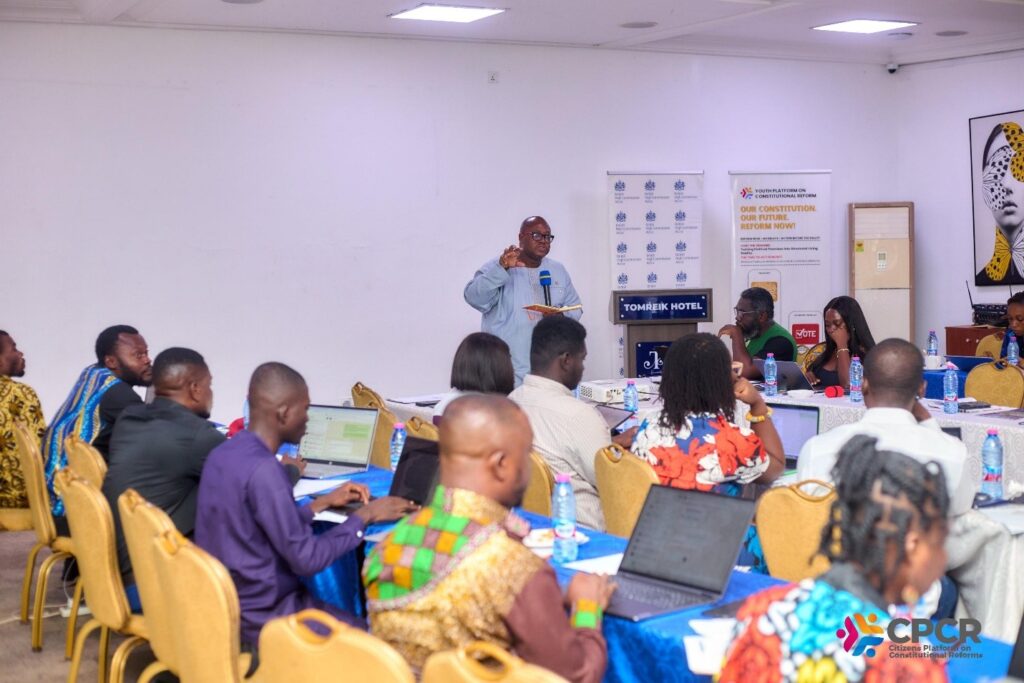
Oliver Barker-Vormawor, Secretary to the Constitutional Review Implementation Committee, clarified the government’s position on the CRC report.
Mr. Barker-Vormawor also addressed issues of dual citizenship, term limits, tenure of office of MPs and the President, explained the distinction between entrenched and non-entrenched provisions, and highlighted the complexity of reform processes.
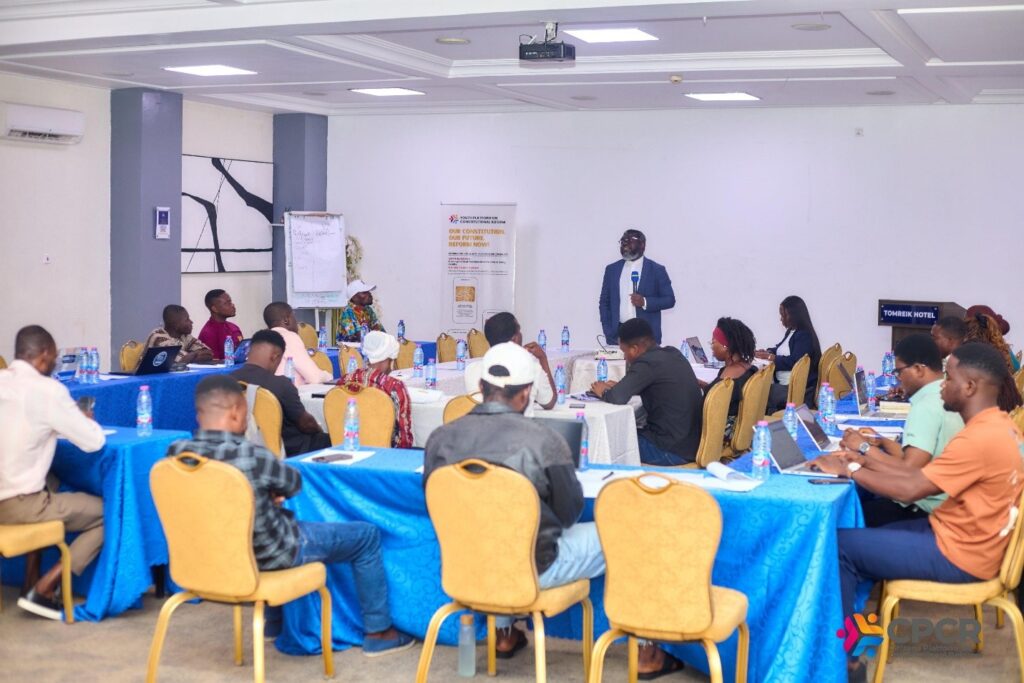
For many participants, the training was transformative. Huzaifa Isahaku, President of the Northern Youth Network, said: “I have always seen the constitution as a tedious document to study, but with how it was broken down today, I got to understand it very well. I can now explain it to my local community members.”
His remarks captured the essence of the workshop’s impact, which simplified complex constitutional issues so youth leaders could confidently take that knowledge back to their communities. As part of the workshop, participants developed regional action plans for public education and committed to forming a national network of certified trainers to support ongoing advocacy efforts. Standardized training materials were adopted for nationwide use, ensuring consistency in civic education across regions.
With Ghana at a pivotal stage in its constitutional reform journey, these workshops mark a significant step toward ensuring that reforms are inclusive, participatory, and responsive to citizens. By empowering both civil society leaders and youth networks, CDD-Ghana and its partners are laying the foundation for a reform process that reflects the voices of all Ghanaians.