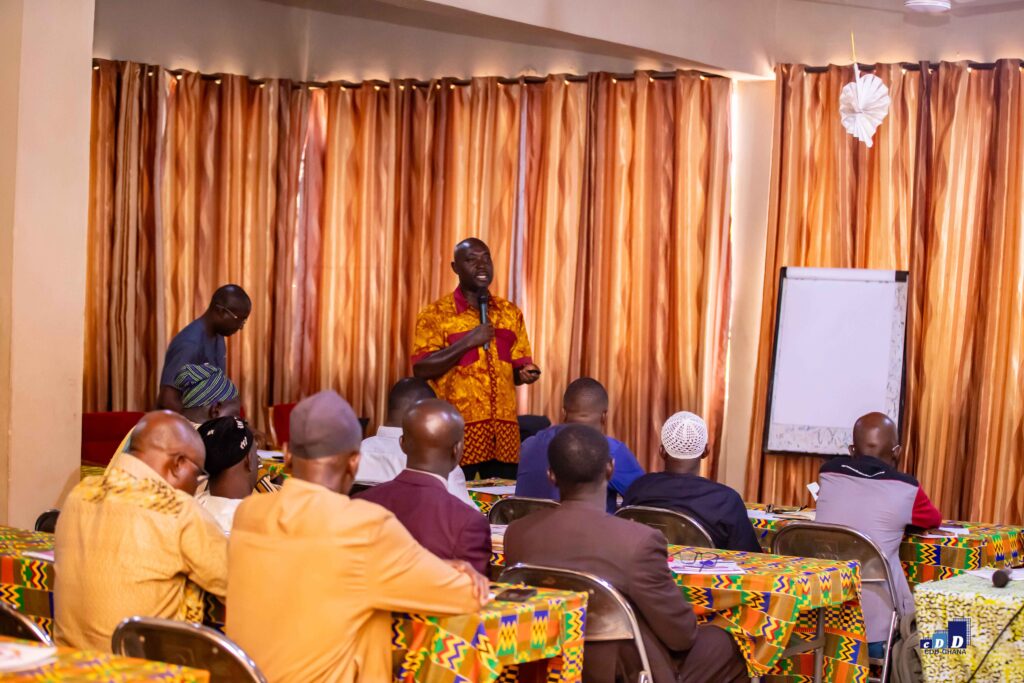


A Programs Manager at the Ghana Center for Democratic Development (CDD-Ghana), Paul Nana Kwabena Aborampah Mensah, has identified key reasons why many civilians refuse to turn in their firearms despite government amnesty programs aimed at reducing the proliferation of small arms.
Speaking on the issue of illegal arms circulation, Mr. Mensah said that weapons in civilian hands pose a serious threat to national peace and security. He warned that the presence of unregulated firearms increases the risk of violence, robbery, and accidental harm, particularly in cases where owners lack proper training.
“More arms in circulation and in civilian hands is not good for the peace of a country,” he said, noting that psychological and temperament issues among individuals can also make firearm possession risky.
Governments worldwide often implement amnesty programs to retrieve illegal weapons from civilians. In Ghana, the National Commission on Small Arms and Light Weapons has introduced similar initiatives to encourage voluntary surrender without prosecution.
However, Mr. Mensah said the response has been underwhelming, with only a small number of people complying.
He attributed low participation to unresolved conflicts in many parts of the country, including land disputes, chieftaincy tensions, and communal clashes, which leave individuals feeling vulnerable.
“In situations where people are involved in chieftaincy or land-related conflicts, they fear that surrendering their weapons will leave them exposed to attacks,” he explained. “If these underlying conflicts remain unresolved, people will continue to feel the need to protect themselves.”
Mr. Mensah also highlighted the cultural use of firearms in festivals and ceremonial events. While traditional displays once relied on gunpowder-based weapons, modern ammunition is increasingly used, sometimes resulting in injuries and accidents.
Rising armed robberies, including highway attacks, further discourage civilians from giving up their weapons. The perception that firearms are necessary for self-defence, he said, reinforces resistance to amnesty programs.
To tackle the problem, Mr. Mensah recommended a two-pronged approach: resolving communal, land, and chieftaincy disputes to reduce fear-driven ownership, and intensifying law enforcement efforts against armed robbery networks.
He also called for strict punitive measures for offenders and publicizing successful arrests to serve as a deterrent.
“Until the root causes that make people feel unsafe are addressed, voluntary surrender of weapons will remain a challenge,” Mensah said.
The remarks came during a two-day training workshop for journalists from the North East, Upper East, and Upper West Regions on Conflict-Sensitive Journalism and National Security in Tamale, funded by the Global Community Engagement and Resilience Fund.
Source: A1 Radio