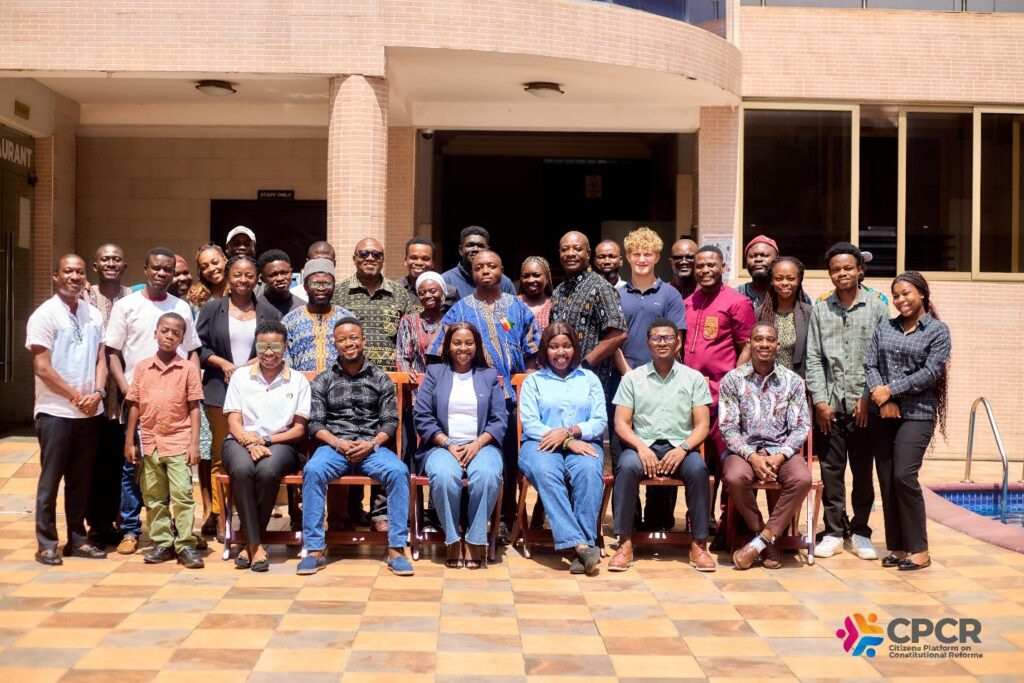
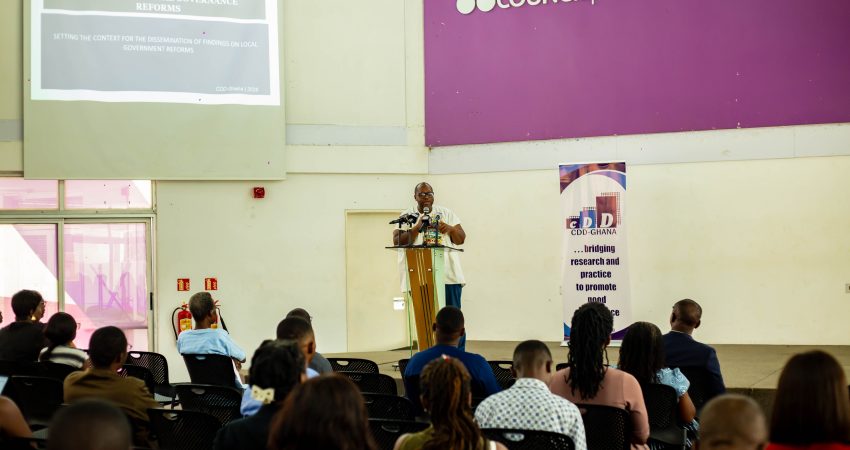
On Thursday, April 2, 2026, the Ghana Center for Democratic Development (CDD-Ghana), with support from the Foreign, Commonwealth & Development Office (FCDO), convened a national stakeholder workshop in Accra to present and discuss findings from its latest research report, Resetting Ghana’s Local Governance System for Enhanced Effectiveness.
The half-day workshop brought together policymakers, civil society actors, technical experts, and media representatives to examine the state of decentralisation in Ghana and identify practical pathways for reform.
The convening comes at a critical moment as Ghana prepares to implement the National Decentralisation Policy and Strategy (2026–2030), alongside ongoing constitutional review processes. Discussions throughout the session focused on the gap between Ghana’s well-established decentralisation framework and the realities of implementation at the local level.
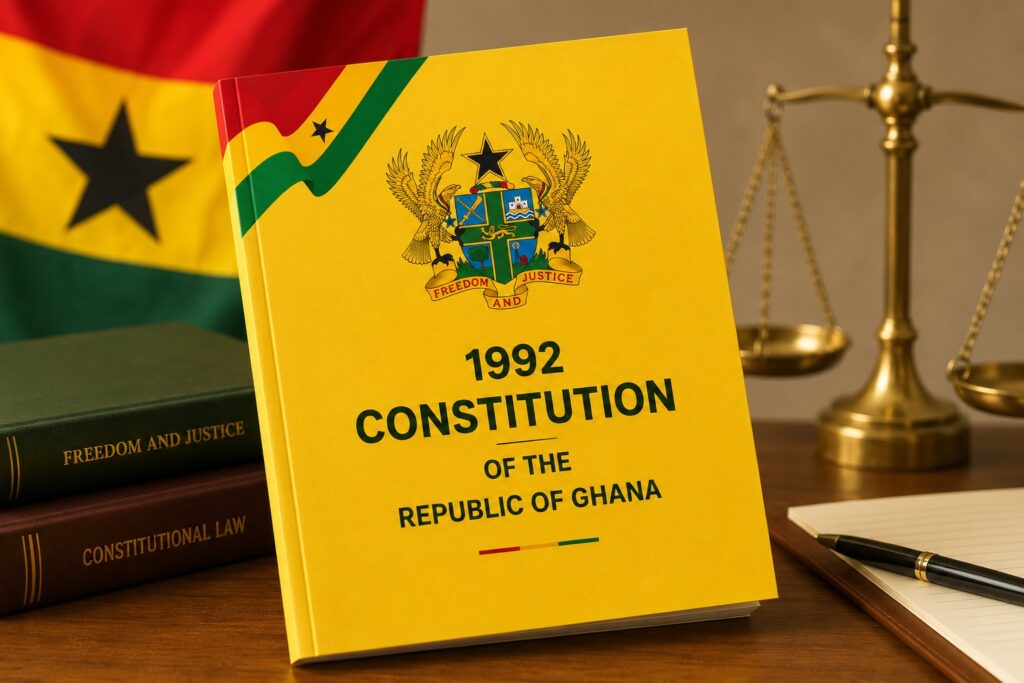
Opening the workshop, Frederick Adu-Gyamfi, Director of Programs and Operations at CDD-Ghana, underscored this disconnect, noting that “while our decentralisation framework anchored in the 1992 Constitution and the Local Governance Act, 2016 (Act 936) remains robust on paper, growing evidence suggests that its implementation continues to face significant challenges.”
He added that “our research highlights a clear gap between formal structures and actual practice, with issues such as political interference, weak accountability systems, limited financial autonomy, and low citizen engagement affecting the effectiveness of Metropolitan, Municipal, and District Assemblies.”
He further observed that “many citizens feel disconnected from decision-making processes, while critical grassroots structures intended to promote participation remain under-resourced and, in many cases, inactive,” stressing that these realities “underscore the urgent need for reform not only at the policy level but also in practice.”
The study presented at the workshop draws on field research conducted across 24 selected Metropolitan, Municipal, and District Assemblies in all 16 regions of Ghana. Using a combination of anthropological methods, focus group discussions, and key informant interviews, the research provides grounded insights into how decentralisation functions in practice.
A presentation from Jacob Tetteh Ahuno, Assistant Monitoring and Evaluation Specialist at CDD-Ghana, unpacked the study through the lens of citizen perceptions, ongoing reform initiatives, and proposals emerging from the Constitutional Review Committee.
Presenting the study’s background and analytical framework, Daniel Armah-Attoh, Senior Research Manager at CDD-Ghana, outlined the research scope, methodology, and objectives, setting the context for interpreting the findings and their relevance to ongoing reform efforts.
Presenting the main findings, Paul Nana Kwabena Aborampah Mensah, Team Lead for Local and Urban Governance at CDD-Ghana, highlighted evidence of systemic “stalling” within Ghana’s decentralisation system. The study examines key thematic areas, including the role of political parties in local governance, the functioning of MMDA committees, and compliance with standing orders and administrative procedures.
Across these areas, the findings reveal gaps between established institutional standards and actual practice, pointing to persistent challenges in accountability, coordination, and institutional alignment, alongside structural constraints related to financing and political oversight. The presentation concluded with key lessons and actionable recommendations aimed at strengthening performance, improving citizen trust, and informing the next phase of reform.
In her remarks, Clara Osei Boateng, Governance Adviser at the Foreign, Commonwealth & Development Office, emphasised the centrality of local governance to democratic accountability, stating that “local governance lies at the heart of the social contract between states and citizens. It is at the district, municipal and community levels that public services are delivered.”
She noted that “although Ghana continues to demonstrate strong democratic credentials, it is also grappling with questions around effectiveness, responsiveness and citizen confidence in public institutions,” adding that “from FCDO’s perspective, we welcome rigorous, locally grounded research that interrogates these challenges honestly and constructively.”
The workshop concluded with a shared recognition that Ghana’s decentralisation challenge is not rooted in the absence of policy, but in the gap between intention and execution.
CDD-Ghana is expected to continue the conversation through regional dissemination of the report across selected regions, extending stakeholder engagement and grounding the findings in local contexts.