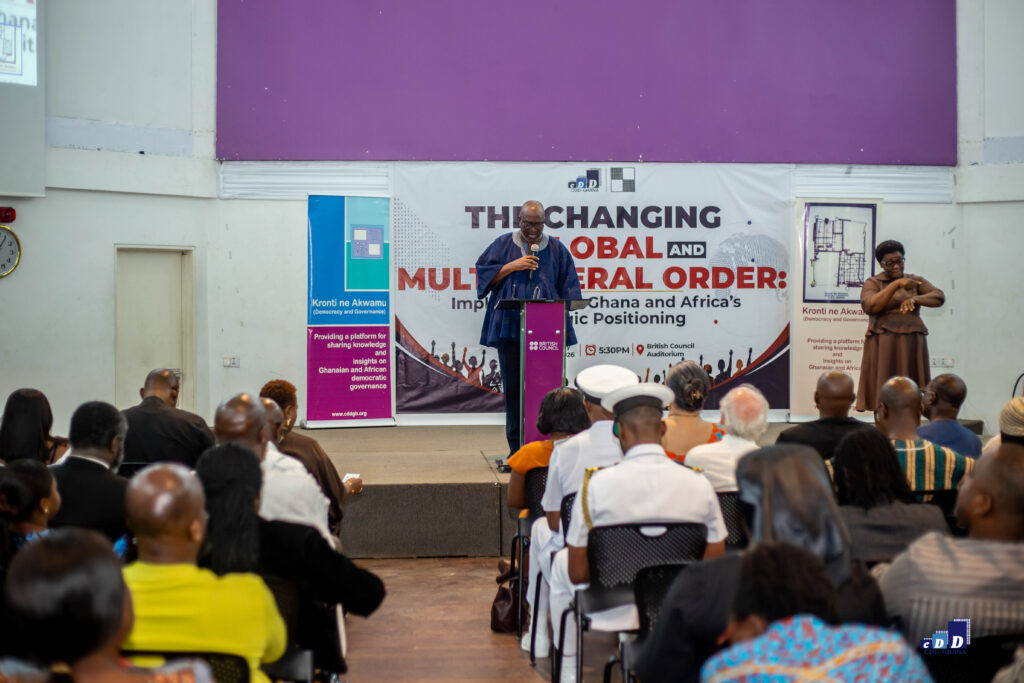
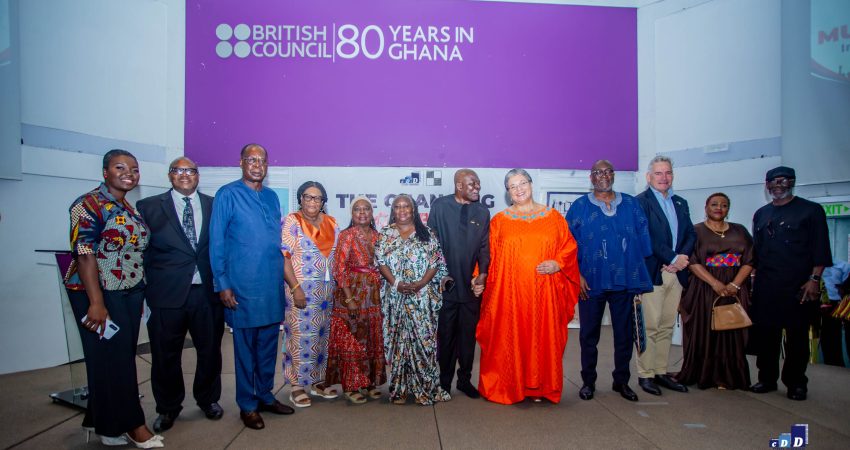
The Ghana Center for Democratic Development (CDD-Ghana) convened its 21st Kronti ne Akwamu annual flagship public lecture, bringing together policymakers, diplomats, academics, civil society actors, development partners, students, and members of the public to examine how Ghana and Africa can navigate an increasingly complex global environment.
Held at the British Council Auditorium in Accra, on July 29, 2026, this year’s lecture was delivered by H.E. Hanna Serwaa Tetteh, United Nations Secretary-General’s Special Representative for Libya and Head of the United Nations Support Mission in Libya (UNSMIL), on the theme: ‘The Changing Global and Multilateral Rules-Based Order: Implications for Ghana and Africa’s Strategic Positioning.’ The lecture was chaired by Ambassador D.K. Osei, President of the Council on Foreign Relations-Ghana.
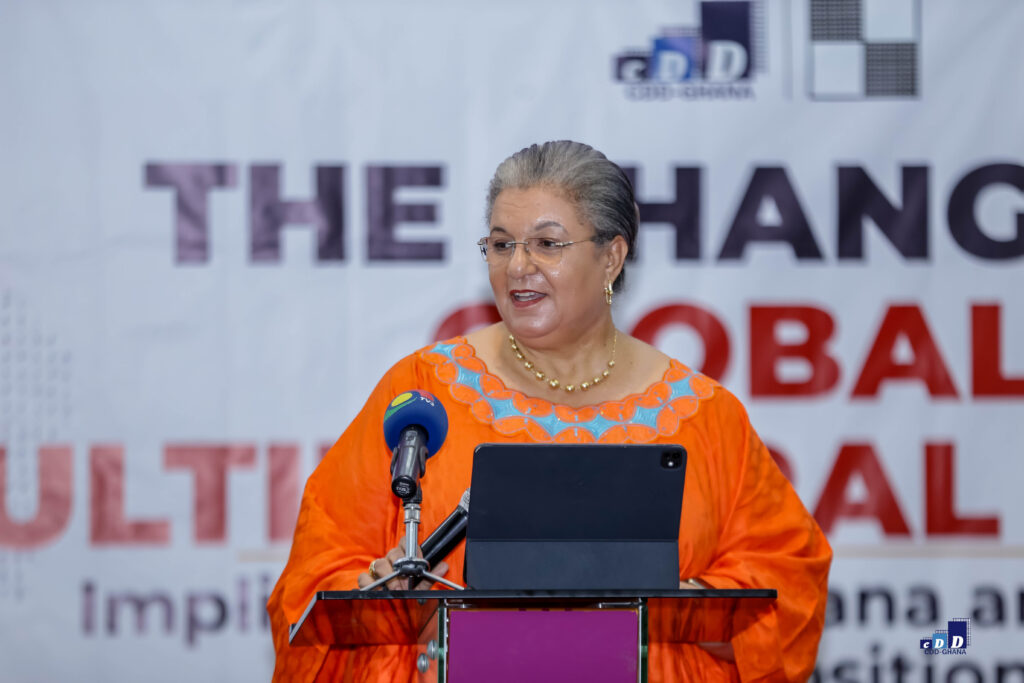
In a thought-provoking address, H.E. Tetteh argued that the international rules-based order is undergoing profound transformation driven by geopolitical competition, shifting power dynamics, technological change, climate pressures, and evolving security threats. While these developments present significant uncertainties, they also offer opportunities for African countries to rethink their strategic priorities and strengthen their influence within regional and global institutions.
She stressed that the weakening of multilateral cooperation disproportionately affects developing countries and underscored the continued importance of institutions such as the United Nations, the African Union, and ECOWAS in addressing transnational challenges. Describing today’s interconnected crises, including climate change, public health emergencies, financial instability, digital governance, and insecurity as ‘problems without passports,’ she emphasized that no country can effectively confront them in isolation.
The speaker also challenged Ghana and other African countries to adopt more strategic, long-term approaches to foreign policy and national development. Rather than responding reactively to global events, H.E. Tetteh encouraged African governments to strengthen domestic institutions, invest in diplomatic capacity, build resilient economies, and pursue partnerships that advance national and continental interests.
In his opening remarks, Ambassador D.K. Osei highlighted the urgency of strengthening Africa’s regional institutions and enhancing continental cooperation at a time when global alliances are shifting. He noted that recent developments within ECOWAS and the wider international system demonstrate the need for African countries to pursue greater unity while advancing coherent foreign policy positions that protect the continent’s interests.
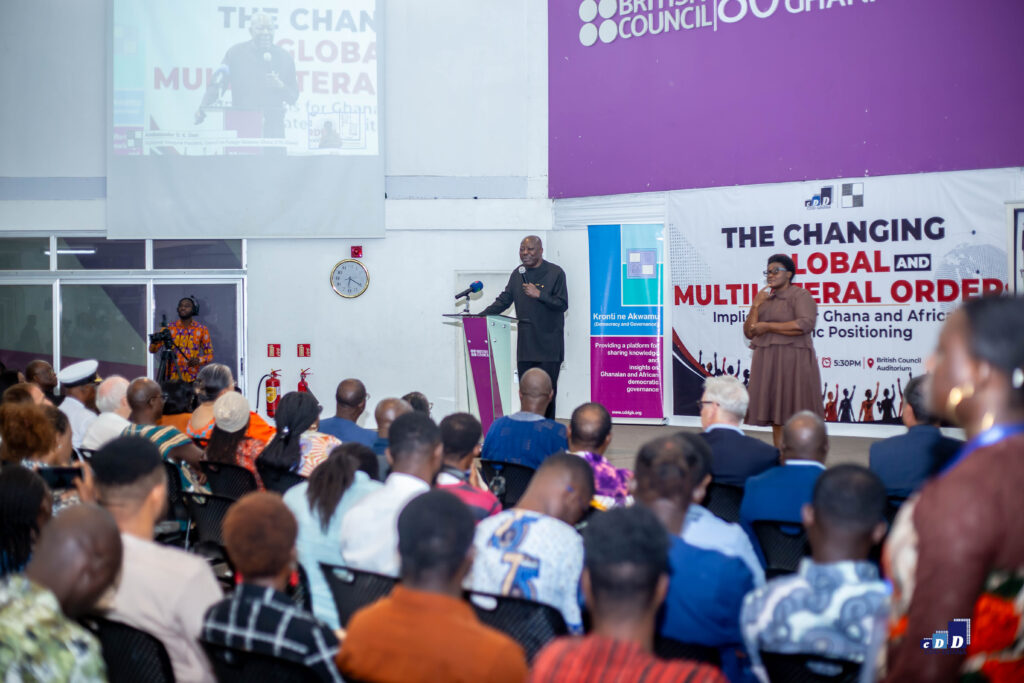
The lecture stimulated a lively discussion during the question-and-answer session, with participants exploring issues including Africa’s geopolitical positioning, regional integration, economic resilience, democratic governance, peace and security, and the future of multilateral institutions.
Now in its 21st edition, the Kronti ne Akwamu Public Lecture continues to provide an important forum for advancing evidence-based policy discourse and connecting scholarship with public decision-making. Through this flagship initiative, CDD-Ghana remains committed to promoting democratic governance, informed citizenship, and strategic conversations that contribute to Ghana’s development and Africa’s place in an evolving global order.