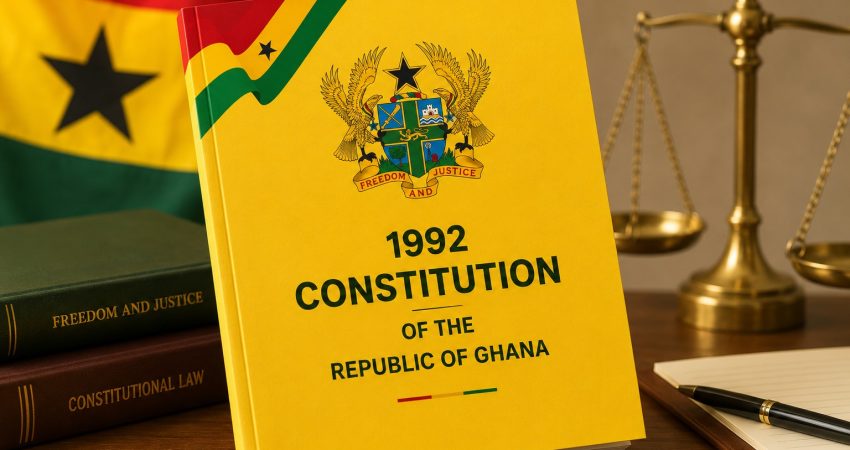
The 1992 Constitution of Ghana is the longest-lasting constitutional order since independence. For the 34 years during which the Constitution has been in force, it has fostered a rigid two-party political competition that has accommodated ethno-regional and religious cleavages, enabling a stable system of regular elections, largely peaceful turnover of governments, and peaceful coexistence. Unfortunately, it has not been enough to engender inclusive and sustained welfare benefits for the majority of Ghanaians, particularly the millions of unemployed youth, who feel despondent in the face of an uncertain future.
Worse still, all signs indicate even further decline without a significant change of course. The ongoing process to reform the 1992 Constitution offers a pathway to recalibrate incentives, institutions and the general power arrangement to facilitate a sharper focus on political and socio-economic transformation that will enable life-changing and meaningful development. This is especially true if the process is undertaken with the seriousness, sincerity and credibility that is a prerequisite for a transformation project on a national scale.
A credible and successful constitutional reform can only succeed if citizens seize this moment as an opportunity to free themselves from the oppression of highly polarized and transactional partisan politics that paralyzes leadership, processes and institutions for only one objective: the perpetuation of power for personal and group material gain, even to the detriment of the survival of the democratic order itself. Citizens must see this project as their second independence moment.
Citizens are tired of the indignity of servitude to hyper partisan politics and processes
A couple of weeks ago, heavy rainfall in Accra caused widespread chaos and loss of property and life across many communities. Emmanuel Ameyaw, writing in the Daily Graphic on May 29, 2026, on the perennial flooding in Accra, captures the dysfunctional system we have created and the causes of our problem.
“Dark clouds gather, heavy rain falls for a few hours, roads disappear under water, homes and shops are submerged, traffic grinds to a halt, and lives are lost. Politicians issue condolences, city authorities promise action, and then, somehow, we move on, until the next flood.
But Accra’s flooding problem is no longer a natural disaster. It is a man-made crisis fueled by poor planning, greed, weak enforcement of regulations, and a dangerous disregard for nature and the environment.”
In response to the devastating floods, the government called for a two-day national clean-up exercise. After the usual performative governance and physical exertions spiced with routine abuses of authority and brutality toward vulnerable citizens, the heaps of sand from the de-silted gutters remain on the roadside, days after the exercise, waiting to seep back into the very same drains from which they came.
The reality is that this man-made crisis is fueled and nurtured by an anti-developmental, transactional, corrupt, state-weakening political system and culture that serves only a few elites and locks the rest of society in a perpetual survival mode. This political system and culture have placed politicians and political actors at the center of even the most basic functions of the State. In this ‘whom you know’ or ‘which politician you know’ State, parents supplicate their political contacts to secure access to schools for their wards, and citizens reach out to ‘big men’ and ‘big women’ to secure access to potable water or to fix roads for the community. Every day in the home or office of some Member of Parliament (MP), Minister or Mayor, people line up with all manner of financial demands to be presented for redress. Some have endured the indignity of travelling miles from villages and low-income communities across the country to solicit support for a health issue – a problem that a well-functioning healthcare system should fix.
The MPs who are supposed to provide for all these needs are spending over $600,000 just to get elected and may have to ‘cough up’ a similar amount during their time in office to secure their political survival in the next electoral cycle. Some of the money used for campaigns and to respond to these demands is financed through manipulated public procurement, general corruption, and even proceeds from illicit activities like Galamsey. The problem of the dominance of money in politics has become so severe that even candidates for the position of Assembly Member in the supposedly non-partisan District Assembly are spending GHC 30,000 or more for campaigns. In 2020, CDD-Ghana estimated the cost of a competitive presidential political campaign at $100 million. This figure becomes even more alarming when one considers that most presidential aspirants would have attempted at least twice before becoming President. In essence, any politician who emerges from this monetized political system is under enormous pressure to ignore the pursuit of the public interest, fight corruption, or govern well.
The window for self-correction is closing fast
Our politics is creating paralysis and weakening state capacity and the ability to deliver basic services, but more importantly, to help the ordinary citizen fulfill their welfare goals. The paralysis is evident in more performative governance, the constant waste of public resources, the inability to plan long term, unaccountable governance and impunity, pervasive corruption, lack of meritocracy in the appointment of public officers, particularly to state enterprises, and ecocide. In the case of ecocide, the emblematic example is the devastation of Galamsey in our communities. The one problem that has allowed Galamsey to persist and now create one of Ghana’s biggest threats to law, order and public welfare is the involvement of partisan political actors and other elites. This perverse and deviant political logic, which favors the personal benefits of political actors and elites at the expense of millions of citizens and now threatens food and water security, reveals the deep hole that we have dug for ourselves.
Unfortunately, there is no respite, and the headwinds are gathering. A number of incidents over the last year and a half are instructive. Sometime last year, the Ministry of Interior opened up recruitment into the security services. The ministry received over 500,000 applications when it was seeking to recruit 5,000. The President intervened to increase the number to 10,000, though it was clear that this was a financial burden the government had not planned for. A year before the Ministry of Interior recruitment exercise, the Ghana Armed Forces organized a recruitment exercise; thousands of young people trooped to the El Wak Stadium. The stampede that ensued killed six young women. The youth unemployment problem has persisted despite many government programs to address it. Meanwhile, we are graduating 400,000 high school students and 600,000 basic school students every year. The general sentiment among young people is that our current political arrangement is not working for them, and they are prepared to consider alternatives to the current governance arrangement and economic opportunities.
Time to alter the political incentives for development as a starting point
On January 26, 2026, the Constitutional Review Committee (CRC) established by President John Mahama submitted its full report to the President. The report titled “Transforming Ghana: From Electoral Democracy to Developmental Democracy” articulates a central reason for our checkered development. The only things going for us are regular, generally peaceful elections and stability, but neither has delivered the transformational and sustained development we crave. We have settled into a routine of changing governments with no discernible difference in development outcomes. To change course, our politics and governance must enable development: the delivery of a stable and productive economy.
The CRC proposals offer a rearrangement of the rules to allow politics to support development. We need partisan politics because it creates a mechanism for resolving our differences, mobilizing common positions, and minimizing conflict if done right. As it is now, the way we do our politics impedes development. To change that, we must limit the dominance of the Executive Presidency in the management of the state. Digging a borehole in Bole should not require Presidential direction if there is effective local government. The State is there to produce and deliver high-quality public services like water, security, housing, healthcare, education, and social protection, to support the efficiency and productivity of the private sector, to create jobs and grow the economy, to build the infrastructure for the modern state and economy, and to deliver justice and fairness in interactions among citizens and between citizens and the state. Many of these tasks are technical and require people with the right competencies and experience to deliver them. This part of the state must be saved from partisan politics that distorts the primary missions of those institutions.
Citizens must embrace the constitutional reform agenda as a personal project and take an interest in the government’s actions throughout the process. In the end, if democracy becomes entirely for sale to the highest bidder, citizens should abandon all hope of development and instead prepare for civil conflict similar to what has afflicted many countries on the continent whose democratic ideals and institutions have been eroded to the point of collapse.
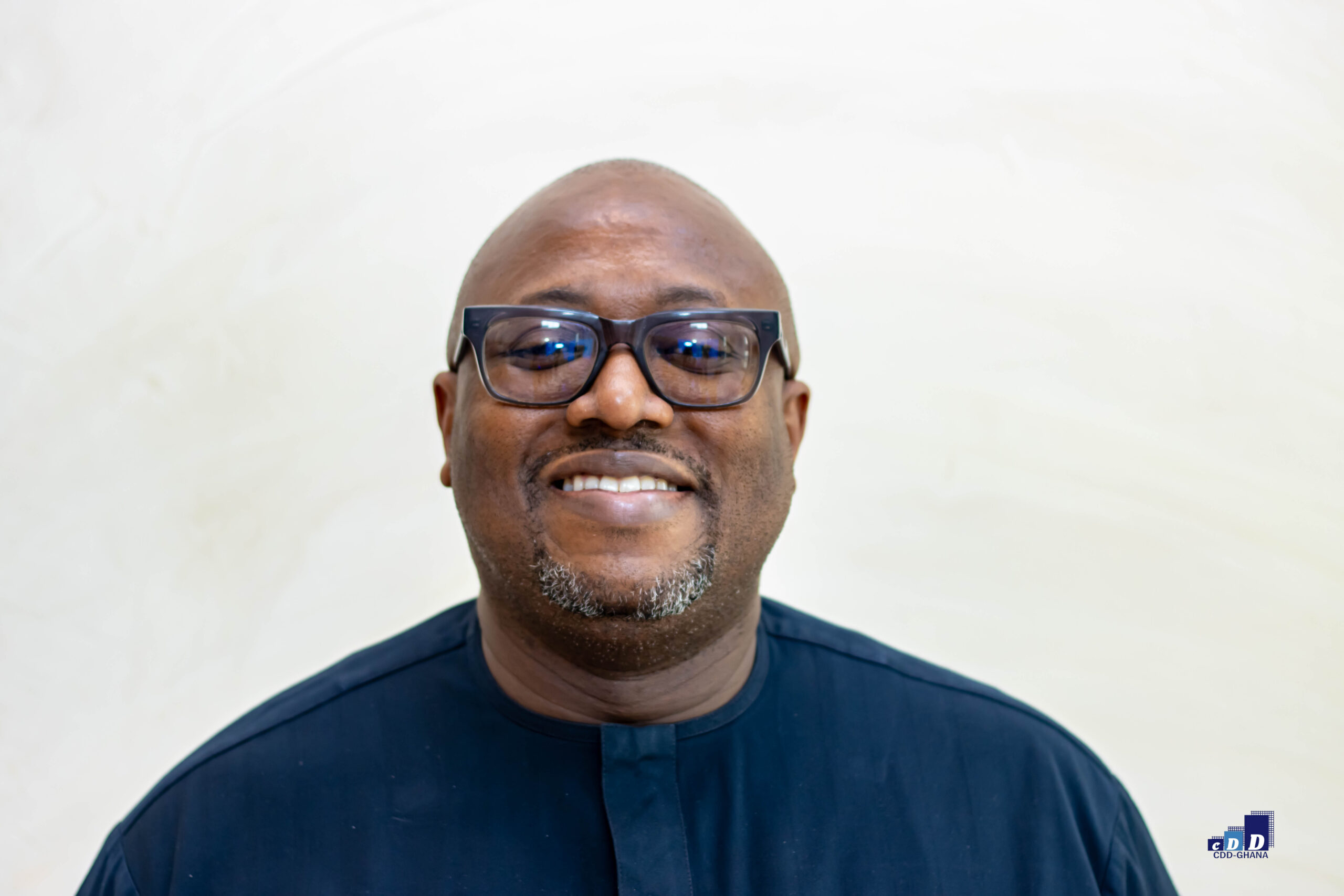
Dr. Kojo Pumpuni Asante is the Director of Policy Engagement and Partnerships at the Ghana Center for Democratic Development (CDD-Ghana).