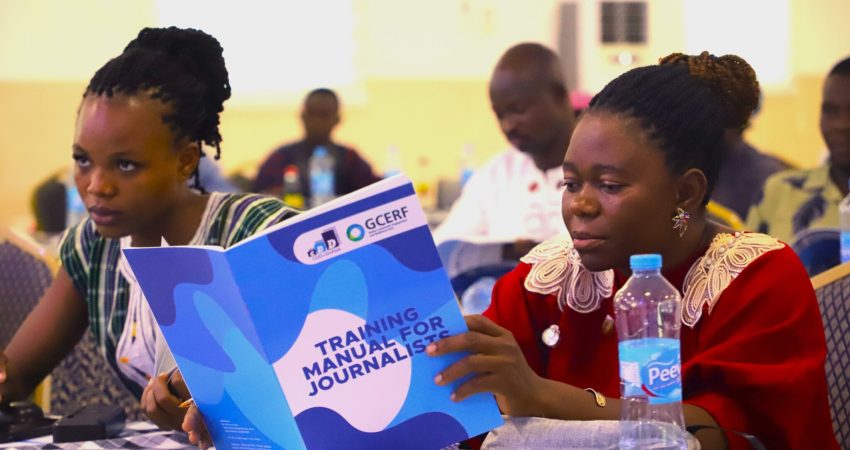
The Ghana Center for Democratic Development (CDD-Ghana) has strengthened the capacity of journalists in Northern Ghana on digital security and cyber literacy as part of a two-day training on conflict-sensitive journalism and national security.
The training, organised with support from the Global Community Engagement and Resilience Fund (GCERF), brought together over 30 journalists from selected districts in the Upper East, Upper West and North East regions.
One of the key sessions focused on digital security and the growing role of misinformation in shaping security narratives. The session was facilitated by Sharon Willis Brown-Acquah, Programs Officer at CDD-Ghana and a member of the Center’s Security Sector Governance team.
The module introduced journalists to practical tools that help verify online content and protect sensitive information sources. Participants were trained to use fact-checking tools such as TinEye, the InVID WeVerify plugin, and EXIF metadata analysis to identify manipulated or misleading digital content.
Brown-Acquah said the session aimed to equip journalists with the skills needed to verify information before publication and to protect both themselves and their sources in the digital environment.
“I took participants through digital security and introduced them to fact-checking tools and ways in which they can protect their sources, especially when dealing with sensitive information,” she said.
She also cautioned journalists about the risks associated with unsecured internet connections.
“There is a need to desist from signing onto public Wi-Fi whenever there is a need to share sensitive information,” she advised.
In addition, participants were encouraged to collaborate within regional media networks to help verify information before publication.
“We also encouraged them to join media security networks in their regions so that when information begins circulating, there are trusted colleagues who can help verify whether it is accurate or false,” Brown-Acquah added.
The digital security session highlighted the growing role of misinformation in fueling tensions and conflict. In many cases, viral content shared on social media platforms is taken out of context or originates from incidents in other countries but is circulated as if it occurred locally.
Journalists were therefore introduced to verification techniques such as reverse image search, video keyframe analysis and metadata examination to determine the origin and authenticity of digital content before reporting on it.
Participants also explored strategies for protecting their data and digital accounts, including enabling two-factor authentication, encrypting sensitive communications and recognizing phishing attempts designed to compromise journalists’ devices.
For many participants, the session provided practical insights into navigating the digital information environment.
Lilian Bongnia, a journalist with Info Radio, Upper West Region, said the training helped clarify key distinctions within the information ecosystem.
“I learnt the difference between misinformation, disinformation and malinformation,” she noted.
Similarly, James Nana Tsiquaye, a journalist with Dreams FM in Bolgatanga, Upper East Region, said the tools introduced during the training would improve how journalists verify information before publication.
“Some of the tools mentioned, I already knew about, but the training added more depth. As journalists, before we publish a story or even share information, there are things we must look out for. Today we learned practical ways to verify information and we hope to apply them in our work,” he said.
The digital security module formed part of a broader training programme that covered topics including the drivers of violent extremism, early warning indicators, and the regional security dynamics affecting Northern Ghana.
Through the workshop, CDD-Ghana seeks to strengthen journalists’ capacity to report responsibly on sensitive security issues and to contribute to social cohesion in communities across Northern Ghana.