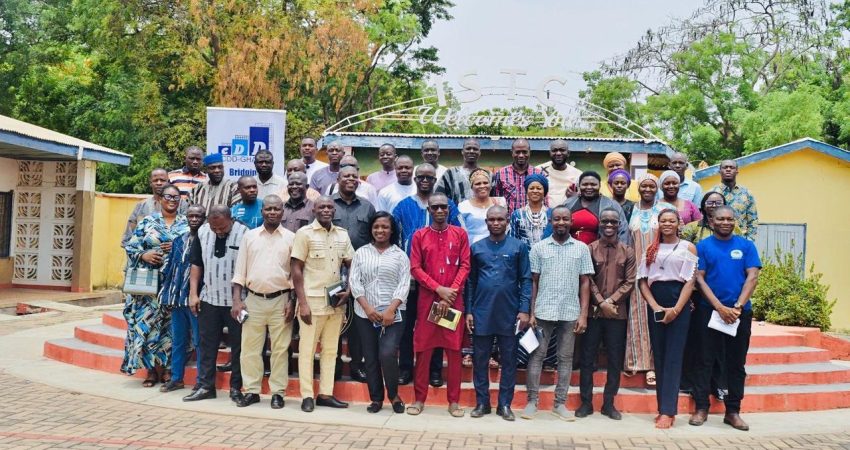
The Ghana Center for Democratic Development (CDD-Ghana), with support from the British High Commission (BHC), has commenced a nationwide regional dissemination of findings from its research report, Resetting Ghana’s Local Governance System for Enhanced Effectiveness. The initiative seeks to deepen stakeholder engagement and promote evidence-based dialogue on strengthening Ghana’s decentralisation system.
The regional engagements follow the National Stakeholder Workshop on Local Government Reforms held in Accra on April 2, 2026, where the study’s findings were presented and validated by policymakers, civil society actors, development partners, and governance experts. Building on the momentum from the national dialogue, the regional dissemination aims to localise the conversation, ensuring that the perspectives of grassroots actors and subnational stakeholders inform ongoing reform efforts.
Scheduled to take place from April 13 to 24, 2026, the dissemination fora will be held across nine regions: Volta, Eastern, Ashanti, Bono, Central, Western, Upper East, Northern, and Upper West. Each regional forum is expected to convene about 60 participants, fostering inclusive and context-specific discussions on the future of local governance in Ghana.
The fora will bring together a diverse range of stakeholders, including youth groups, women’s organisations, political parties, traditional authorities such as chiefs and queen mothers, civil society organisations, private sector leaders, and Members of Parliament. In addition, the dissemination will engage key actors who contributed to the study through Key Informant Interviews and Focus Group Discussions. These include traders and market leaders, Assembly Members, Presiding Members, Metropolitan, Municipal, and District Coordinating Directors (MMDCDs), Metropolitan, Municipal, and District Chief Executives (MMDCEs), Unit Committee members, and representatives from the media. This inclusive approach is intended to ensure that the findings resonate with those directly involved in local governance and service delivery.
Each regional forum will feature two core presentations. The first will focus on the Call for Reforms, integrating the main recommendations of the Constitutional Review Committee and situating them within Ghana’s broader decentralisation agenda. The second presentation will provide a detailed overview of the research findings, highlighting systemic challenges affecting the effectiveness of Metropolitan, Municipal, and District Assemblies (MMDAs), including issues related to political dynamics, institutional coordination, financial autonomy, and citizen participation.
The study underpinning these engagements draws on extensive fieldwork conducted across 24 selected MMDAs in all 16 administrative regions of Ghana. Employing a mixed-methods approach that combines anthropological research, Focus Group Discussions, and Key Informant Interviews, the research offers grounded insights into the operational realities of decentralisation. The findings point to a persistent gap between Ghana’s robust legal and policy frameworks and their implementation in practice, contributing to low public trust and uneven service delivery at the local level.
Beyond stakeholder dialogue, the dissemination strategy incorporates proactive media engagement to broaden public awareness and stimulate national discourse on local governance reform. Each regional team will organise media activities, including live studio interviews, to amplify key messages and ensure that the evidence generated informs policy debates and public understanding.
Through this regional dissemination, CDD-Ghana aims to harmonise stakeholder perspectives, validate the applicability of the findings across diverse local contexts, and build consensus on actionable reform priorities. The initiative also seeks to strengthen ownership of the reform agenda among local actors, whose participation is essential for translating policy recommendations into tangible improvements in governance and service delivery.
As Ghana advances the implementation of the National Decentralisation Policy and Strategy (2026–2030) and considers proposals from the Constitutional Review Committee, these regional engagements provide a critical platform for inclusive dialogue and evidence-based decision-making. By extending the conversation beyond the national level, CDD-Ghana reaffirms its commitment to supporting a responsive, accountable, and effective local governance system that reflects the aspirations of citizens across the country.